
LA MAISON


Founded in 1929 at 136 avenue des Champs-Élysées, the house of Maggy Rouff established itself as one of the leading names of twentieth-century Paris Haute Couture. This journey retraces its legacy.
The Founder
Maggy Anna de Wagner belonged to a generation of designers who approached couture as both an intellectual pursuit and a craft. She trained at the Paris house of Drecoll from 1912, where she developed a disciplined and highly structured understanding of dressmaking. In 1929, she acquired the Rouff couture house and established her own label at 136 avenue des Champs-Élysées, founding the house of Maggy Rouff. For more than four decades, she remained its sole creative force, guiding the maison with a rare combination of rigor, independence, and a deeply personal vision of modern elegance.

The Radiance
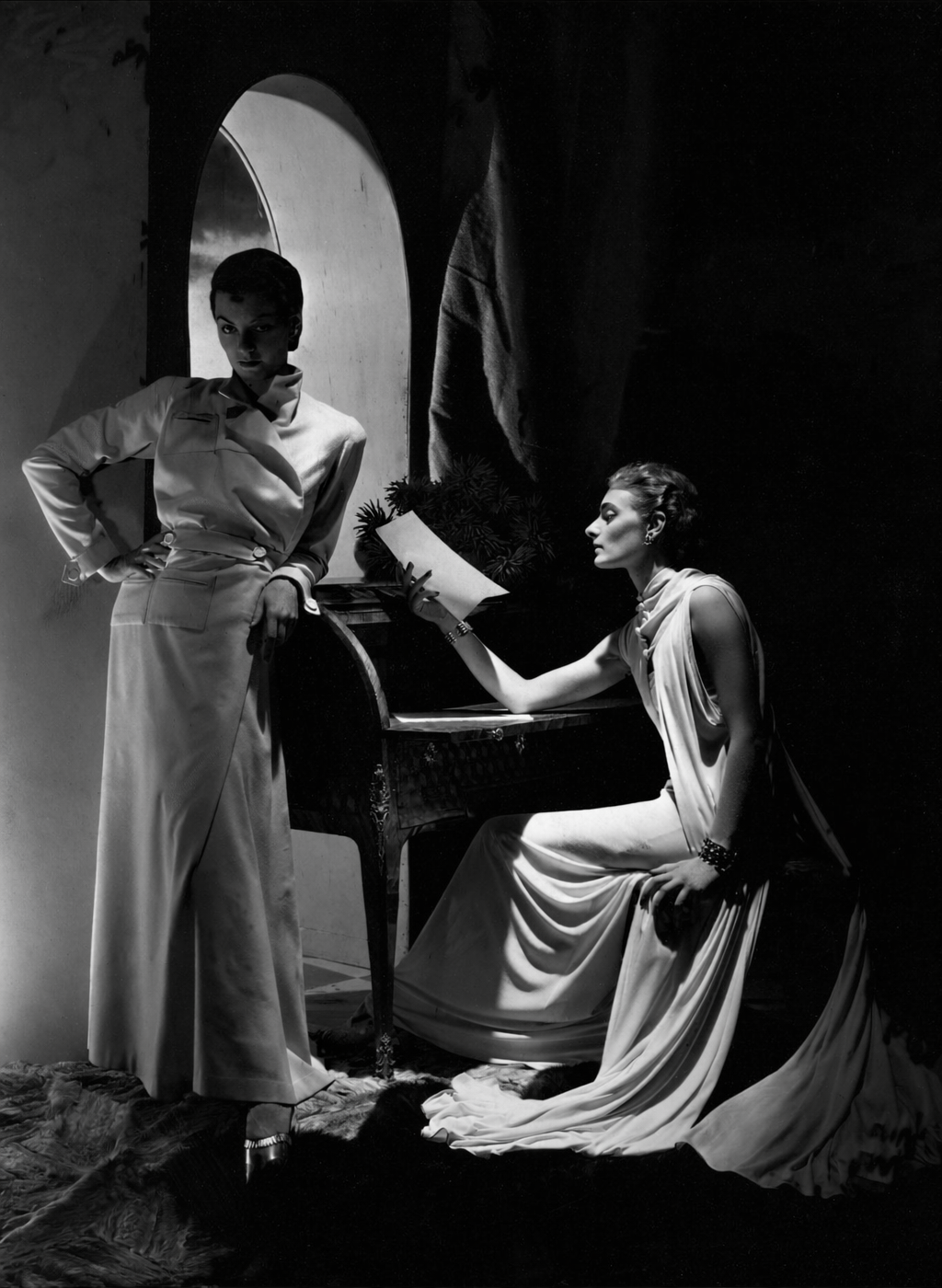
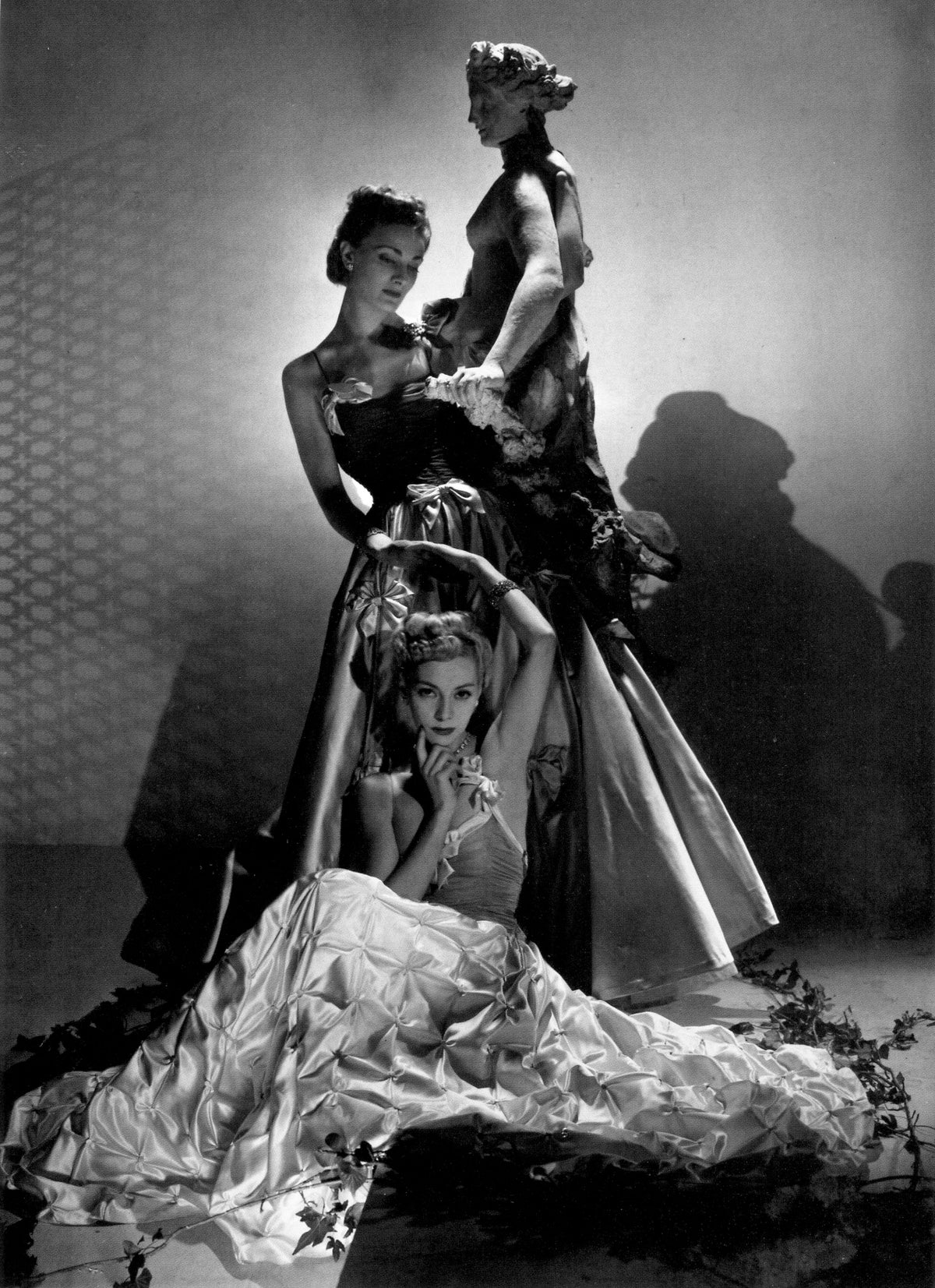
During the 1930s, the house of Maggy Rouff stood among the leading names of Paris Haute Couture.
Her collections attracted a French and international clientele in search of a modern elegance suited to contemporary life.
Day dresses, sportswear, evening gowns, and accessories formed a complete wardrobe, conceived to accompany with distinction the many occasions
of social and worldly life.
Regularly featured in Vogue, Harper’s Bazaar, and L’Officiel, photographed by the era’s leading photographers and worn by prominent models and society figures,
the house played a full role in the international influence of Parisian elegance.
After establishing itself on the Champs-Élysées,
the opening of a London branch in 1937 marked a decisive step in its expansion, affirming its place among the maisons that helped secure Paris’s status as the world capital of couture.

The Style
The Maggy Rouff signature is instantly recognizable: a masterful command of the bias, an exacting science of drape, and a precise architecture of volume. Each silhouette is conceived as a complete composition, where line, fabric, and movement exist in constant dialogue.
Rouff understood that fabric transforms colour wool absorbs it, silk gives it light, crêpe refines and controls it and she often layered different textures within the same tone to reveal its full depth.
She embraced daring harmonies, from blue-violet to a deep burnished copper she called “chaudron,” as well as a subtle range of greys conceived not as neutrals, but as colours designed to be worn.
Her experience in sportswear introduced a new freedom into couture, bringing suppleness
and precision to garments created to move with the body rather than constrain it.
Accessories, gloves, costume jewellery, embroidery, and surface details were integral to the design, each element contributing to the balance of the whole.
Maggy Rouff’s style was never about effect for its own sake, but about discipline in motion — a couture language in which the rigor of cut always served the modernity of allure.


Stage and Screen
From the late 1930s onward, the house of Maggy Rouff maintained close ties with the worlds of theatre, opera, and cinema, for which she regularly designed costumes and complete wardrobes.
Her creations notably appeared in Si Versailles m’était conté (1954), directed by Sacha Guitry, and were worn by leading figures of the performing arts,
including Cécile Sorel, Danielle Darrieux,
and Maria Callas. Through these collaborations, the house became part of the long-standing dialogue between Paris couture and the world of the arts.
This recognition was matched by the loyalty of an aristocratic and international clientele, confirming Maggy Rouff’s place among the great couture houses of the twentieth century.
Among those who wore her creations were Princess Marina, Duchess of Kent, Princess Xavier of Bourbon-Parma, members of the Rothschild family, Grace Kelly, and Audrey Hepburn,
whose patronage helped extend the house’s influence in France and abroad.
The Invisible
The house expressed itself not only through the garment.
From an early stage, Maggy Rouff developed a line of perfumes, extending her universe into the invisible and giving form to another dimension of her creative vision.
Étincelle, Excentrique, Fleur Folle — fragrances that conveyed a spirit of energy, audacity, and independent femininity,
reflecting the same modern sensibility that defined the house’s approach to elegance.


Transmission
A committed figure in the defence of French Haute Couture, Maggy Rouff played an active role in promoting its influence in France and abroad through
her involvement in professional organisations, as well as through lectures and published writings.
The author of several books, including La Philosophie de l’élégance, she upheld an exacting vision of style founded on culture, restraint,
and the traditions of French elegance. Her contribution to the profession was recognised in 1952, when she was appointed Chevalier de la Légion d’honneur.
Established successively on the Champs-Élysées, avenue Matignon, and later avenue Marceau, the house evolved alongside the transformations of Paris couture throughout the twentieth century.
In the 1970s, it joined the Boussac group, then owner of Christian Dior, placing its name within the lineage of the great maisons that contributed to the international prestige of French Haute Couture.
The House Today
The house of Maggy Rouff enters a new chapter in its history.
Under the direction of designer Eric Tibusch, creation takes up the interrupted thread; not as a reconstruction, but as a dialogue across time.
A dialogue with Maggy Rouff herself, returning to what defined the very essence of the house: the architecture of the garment, the freedom of movement, and the intelligence of the silhouette.
To return to Maggy Rouff is not to recreate the past, but to recover a standard of rigor.
The garment is conceived through its structure, its cut, and its relationship to the body.
The silhouette is shaped in motion, with precision, discipline, and freedom. Faithful to the spirit of its founder, the house moves forward without nostalgia, continuing a vision of couture
in which the discipline of line serves the modernity of allure, and where style remains a living force.

